
Micron-Level Precision: Inside Loveubest’s Mold Manufacturing and IQC Systems
2026-11-14 11:00:00 | love best
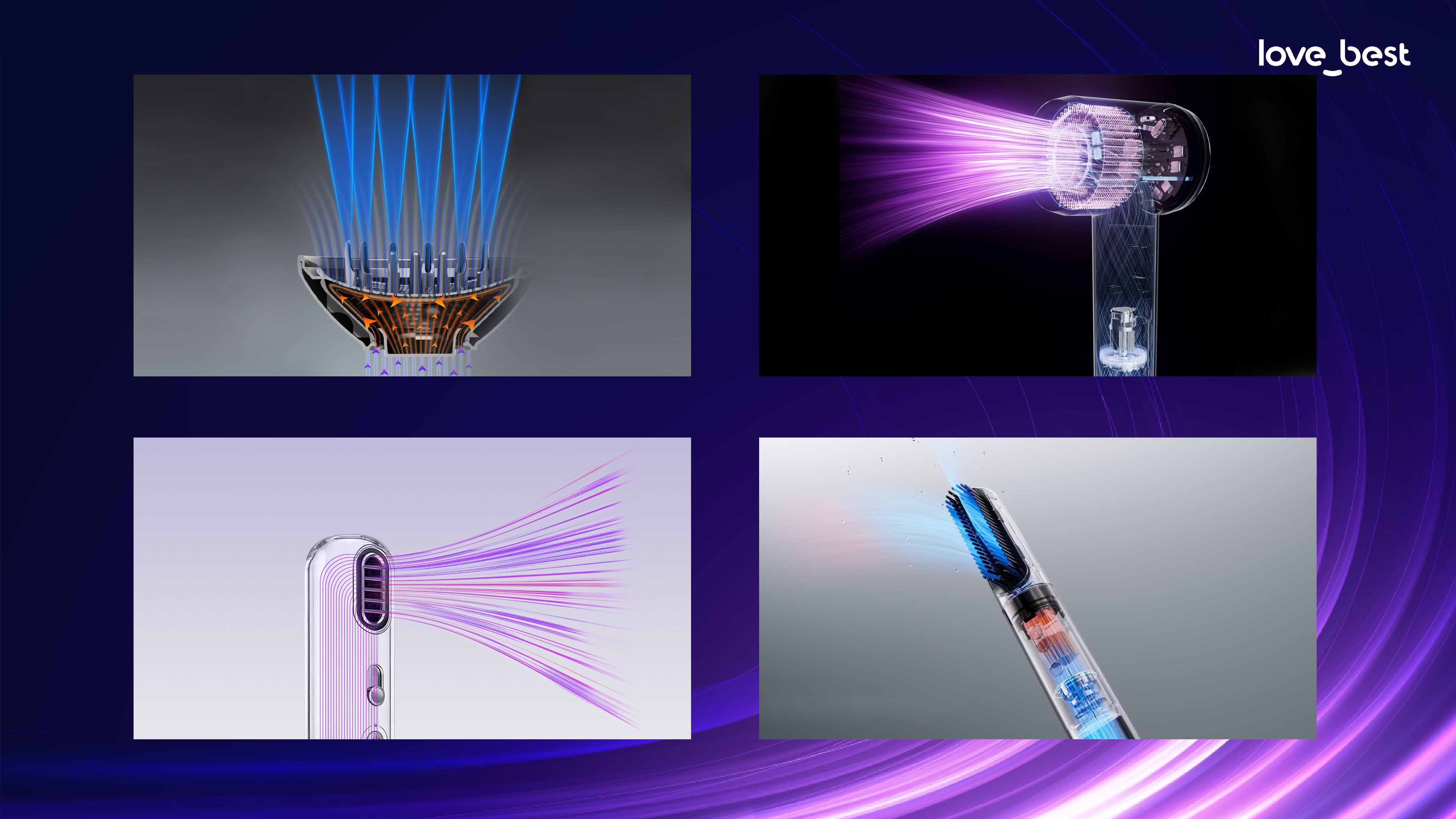
As airflow speeds increase, aerodynamic noise can rise sharply, presenting a fundamental engineering challenge in hair dryer development. Loveubest addresses this challenge by combining deep engineering expertise with advanced simulation technologies to guide product design and optimization.
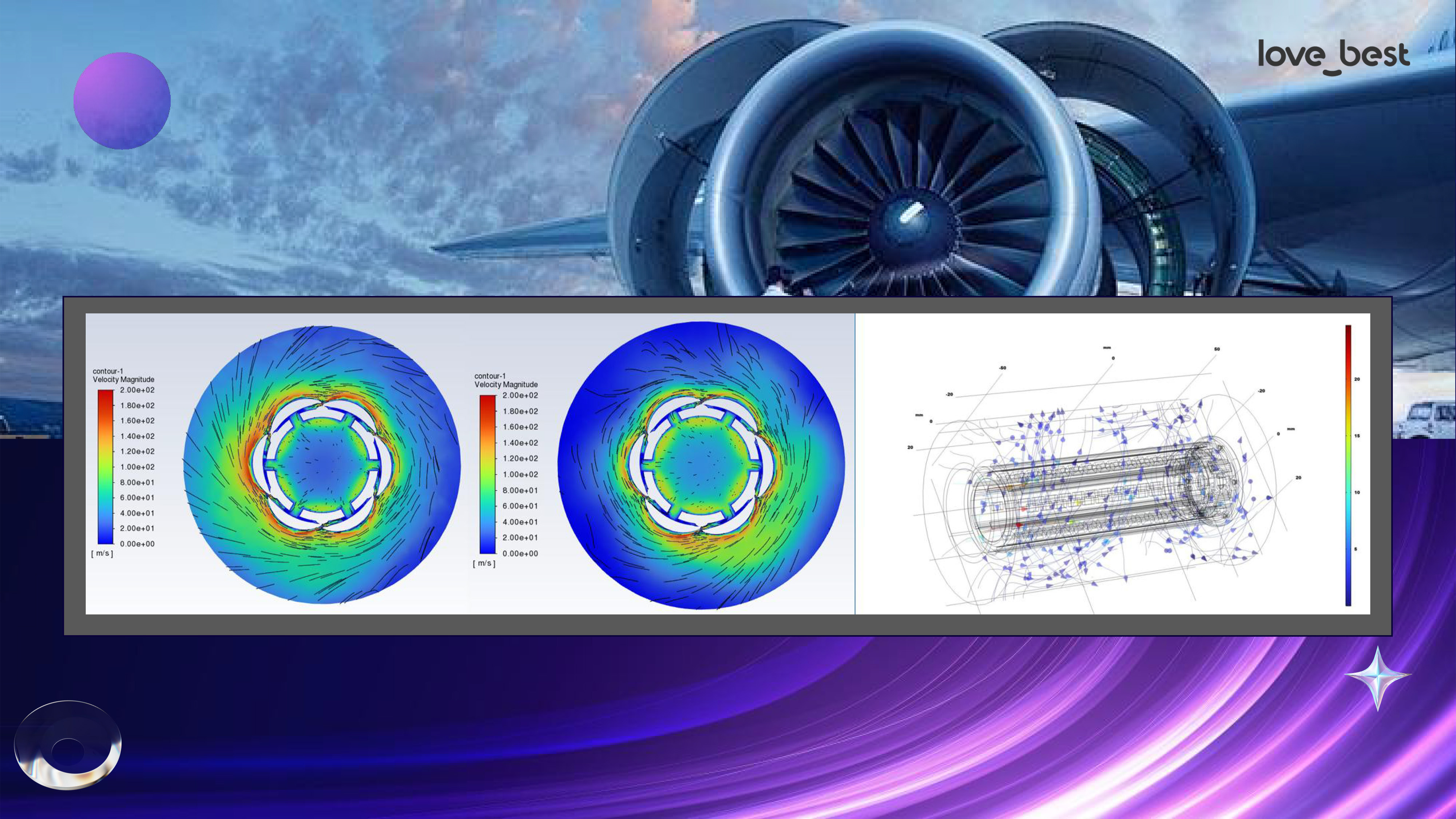
Our engineering team combines 3D modeling with Computational Fluid Dynamics (CFD) simulations to analyze impeller and airflow duct designs under a range of operating conditions. This enables us to precisely capture airflow patterns and pressure variations. By refining blade profiles and duct geometry, we optimize airflow dynamics and enhance overall aerodynamic performance.
CFD analysis also helps us identify vortex formation zones and areas of flow separation. Using these insights, we refine duct contours and impeller geometry to reduce turbulence-induced noise at its source during the design phase. We also optimize impeller dynamic balancing to support smoother, more stable operation.
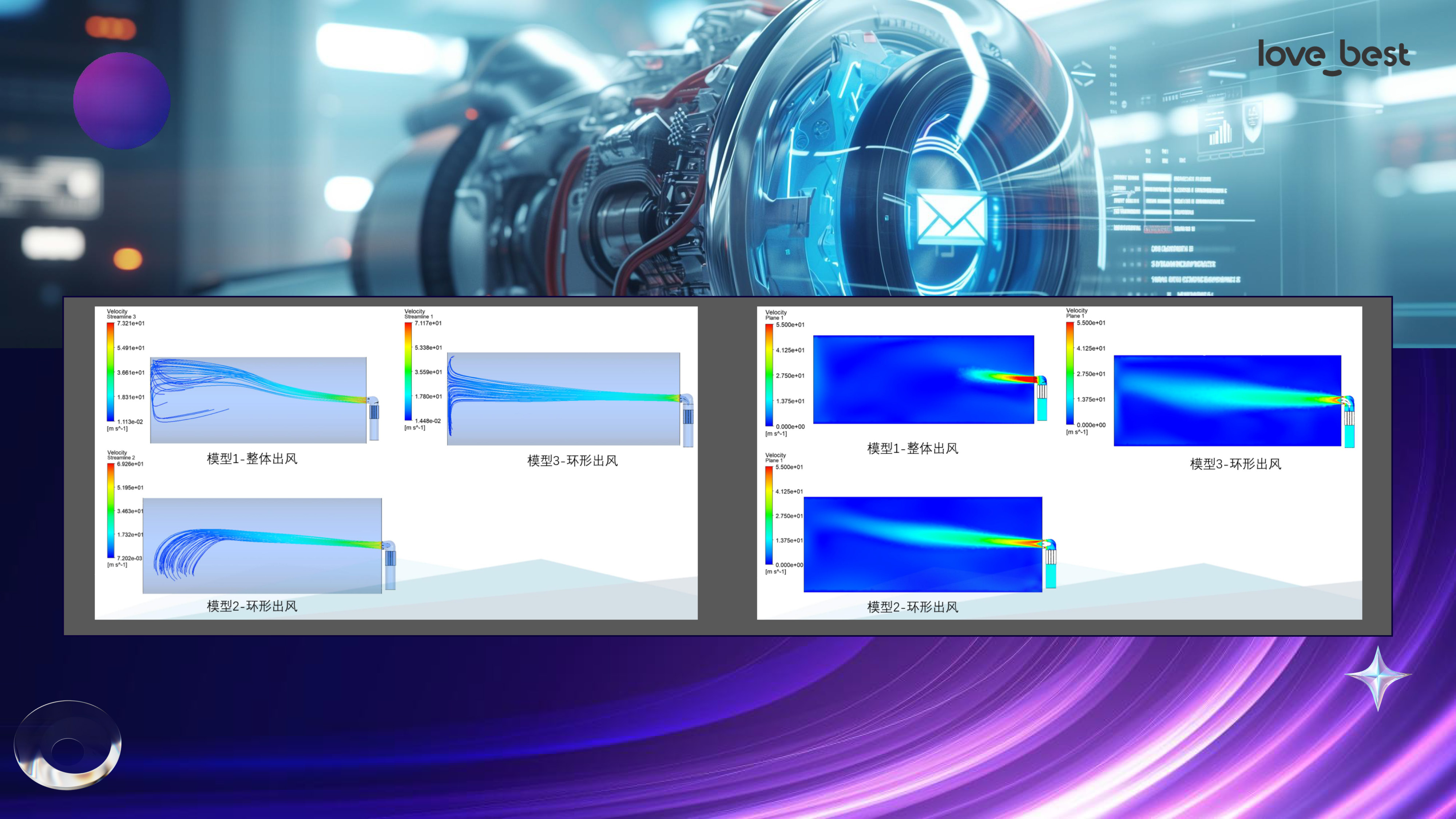
Loveubest has developed distinctive aerodynamic technologies to optimize airflow performance while enhancing the user experience. Our proprietary Vector-Based Variable Airflow Technology enables airflow to switch between two directions within the air duct. By integrating advances in materials science, fluid dynamics, and mechanical engineering, we deliver optimized airflow performance and an enhanced user experience.
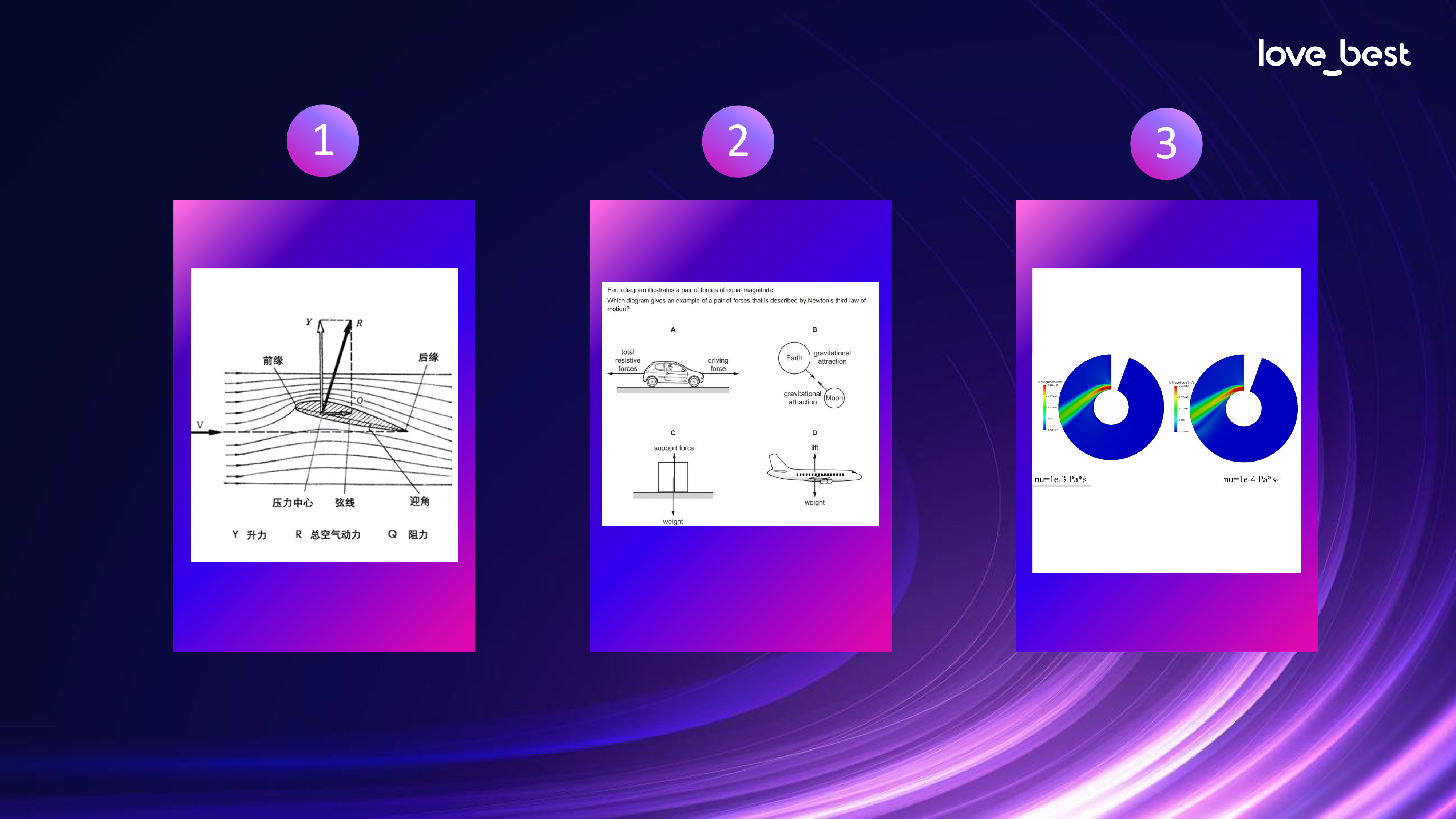
Drawing on Bernoulli’s principle, Newton’s third law, and the Coandă effect, our impeller blades feature an airfoil profile with a convex upper surface and a flat underside. This design creates a pressure differential that helps generate and accelerate airflow.
Together, these aerodynamic innovations enable Loveubest products to achieve motor speeds of up to 110,000 RPM and airflow speeds of up to 64 m/s or 68 m/s, depending on the model, while maintaining noise levels between 60 and 72 dB.

2026-11-18 10:00:00

2026-11-14 11:00:00

2026-11-13 11:00:00

2026-09-12 13:00:00